
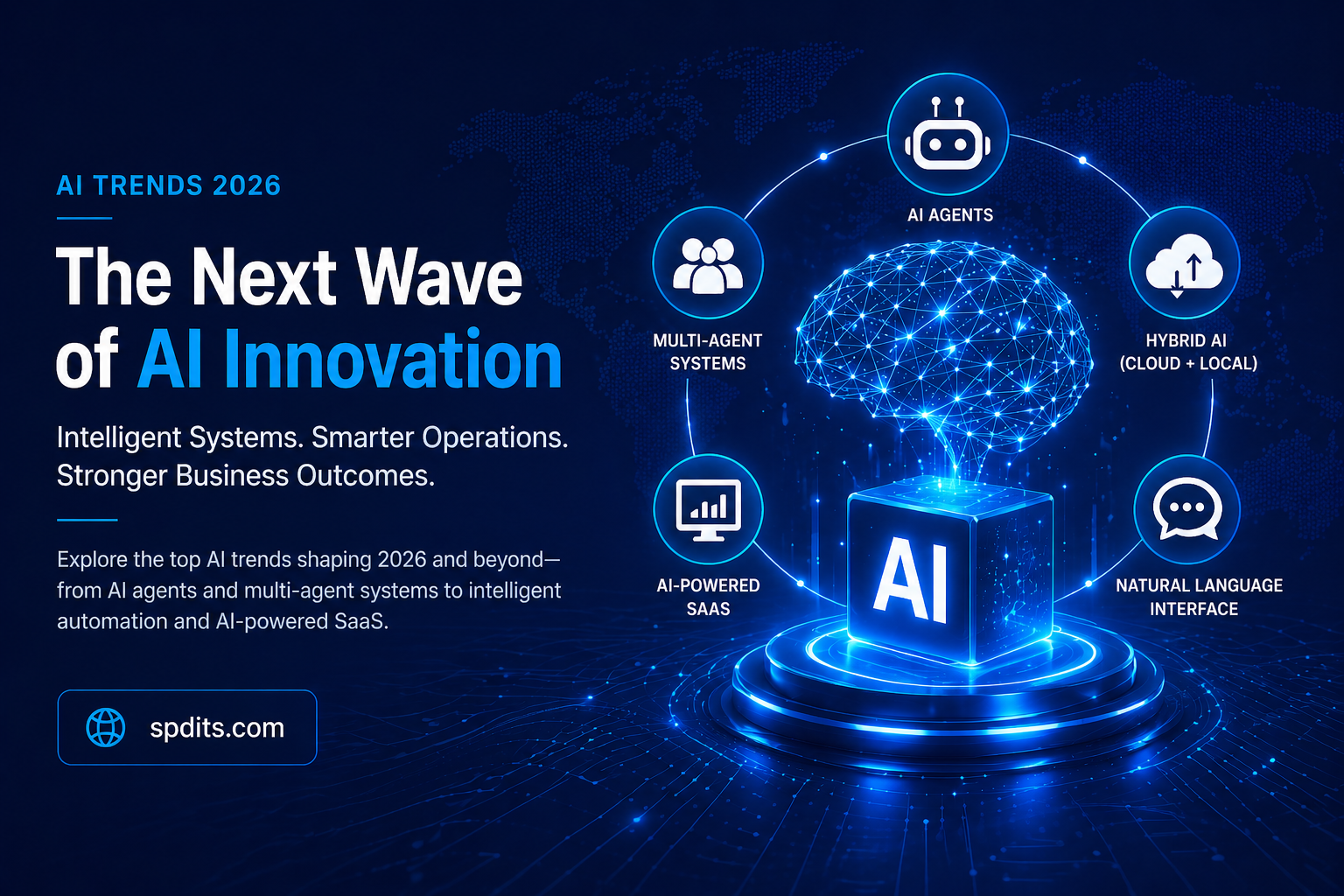
🚀 AI Trends in 2026: What’s Actually Changing for Businesses
Introduction
Most businesses have already experimented with automation in some form. Some have seen real value, while others are still trying to figure out where it fits.
What’s changing now is that AI is moving beyond simple automation. It’s starting to handle more decision-making, more analysis, and in some cases, even parts of execution.
This isn’t about replacing systems overnight. It’s about making existing processes smarter and more efficient.
What Is Actually Changing?
In the past, automation was mostly rule-based. If X happens, do Y.
Now, AI systems can:
- Look at data and identify patterns
- Adjust based on new information
- Suggest next steps
- Handle tasks that used to require manual review
The biggest difference is that systems are becoming more flexible instead of rigid.
Key AI Trends Businesses Should Pay Attention To
1. AI Handling More of the Work
Instead of just assisting, AI is starting to take ownership of parts of a workflow.
For example:
- Reviewing incoming data
- Flagging issues
- Suggesting actions
- Completing parts of the task
This reduces the need for constant manual involvement.
2. Multiple AI Components Working Together
Rather than relying on one system, companies are starting to break tasks into smaller pieces handled by different components.
For example:
- One part focuses on planning
- Another executes
- Another checks results
This makes the overall system more reliable and easier to scale.
3. Keeping Sensitive Data Closer to Home
Not everything can or should go to the cloud.
Many companies are now combining:
- Cloud solutions for heavy processing
- Local systems for sensitive data
This gives better control without losing flexibility.
4. Smarter Software, Not Just More Software
Instead of adding more tools, businesses are looking for ways to make their existing systems smarter.
That means:
- Automating repetitive tasks
- Improving reporting
- Reducing back-and-forth between teams
The goal is efficiency, not complexity.
5. Simpler User Experience
One noticeable change is how people interact with systems.
Instead of navigating multiple screens, users can now:
- Ask a question
- Request a report
- Trigger a process
This reduces training time and makes tools easier to use.
What This Means in Practice
Companies that apply AI in a practical way are seeing:
- Less manual work
- Faster turnaround times
- Better visibility into operations
- Fewer bottlenecks between teams
And importantly, this can often be done without replacing core systems.
How SPD IT Solutions Approaches This
At SPD IT Solutions, the focus is not on adding AI for the sake of it.
The focus is on:
- Identifying where time is being lost
- Reducing repetitive work
- Improving visibility for the business
- Making existing systems work better together
The goal is simple: real improvements that can be measured.
Final Thoughts
AI does not need to be overcomplicated.
The real value comes from using it in the right places:
- Where there is repetition
- Where there are delays
- Where decisions rely on data
Businesses that approach it this way will see results much faster than those trying to overhaul everything at once.
📩 Get Started
If you are looking at ways to improve your operations without major system changes, this is a good time to explore what is possible.
👉 Reach out to SPD IT Solutions to start the conversation.